
Article
How to Maximise Productivity for Remote & Hybrid Teams

Hybrid Outperforms — When Done Right
Hybrid work offers enormous potential. 67 % of employees rate their work as "excellent" under flexible arrangements. Time once spent commuting is reclaimed, focus deepens, and output improves — driving an 11 % productivity boost.
But flexibility without structure is drift. And productivity without intention is accidental.
What follows is a practical framework for getting it right.
1. Outcomes Over Hours
Old metrics die hard. We still think in hours logged, tasks ticked off, or emails sent. But modern productivity lives in focus, flow, and energy applied to meaningful work.
Hybrid workers report higher productivity than fully onsite peers when performance is structured around outcomes rather than hours logged.
What to do:
- Define clear deliverables upfront. Ambiguity kills accountability.
- Break work into measurable milestones.
- Prioritise high-value tasks over performative busyness.
- Track completion and impact — not just hours logged.
2. Deep Work is Sacred
Hybrid work offers flexibility. But it also invites distraction. Without guardrails, calendars fill with low-value meetings. Notifications fracture attention. Context switching becomes the default.
Teams that implement structured deep work routines report higher-quality output and fewer errors. The principle is simple: focus must be protected collectively, not individually.
What to do:
- Establish daily focus blocks.
- Introduce team-wide "quiet windows" where meetings are not scheduled.
- Use status indicators to signal focus mode.
- Default to asynchronous updates wherever possible.
3. Confusion Kills Productivity
Hybrid productivity suffers less from distance and more from confusion. Structured communication increases hybrid team efficiency, with 64 % reporting improved productivity.
What to do:
- Document decisions in shared dashboards or collaboration platforms.
- Standardise project briefs to reduce misunderstandings and speed onboarding.
- Clarify ownership explicitly: Who is responsible? By when? What constitutes done?
- Review alignment weekly to resolve blockers and confirm priorities.
4. Culture Is the Secret Weapon
Engaged hybrid employees aren't just happier — they perform better, stay longer, and influence others positively.
What to do:
- Recognise achievement transparently.
- Encourage knowledge-sharing over visibility.
- Schedule strategic in-person days for creativity and relationship-building.
5. Energy Beats Schedule
Productivity is not linear across the day. It follows cognitive cycles. Cognitive science shows respecting energy rhythms reduces sick days by 36 % and lowers stress.
What to do:
- Identify peak focus hours and batch cognitively demanding tasks accordingly.
- Separate shallow work from deep thinking.
- Schedule breaks deliberately — not as leftovers between meetings.
6. Tool Selection: Less Is More
Every additional platform adds cognitive load. Hybrid productivity thrives in clarity, not app sprawl.
What to do:
- Choose async-first collaboration tools.
- Limit synchronous platforms to strategic use.
- Conduct quarterly tech audits to remove redundant tools.
- Ensure every platform answers the question: does this reduce friction?
The most effective tech stacks feel invisible — they support the work without getting in the way of it.
7. Structure Enables Freedom
Autonomy without structure is chaos. Structure without autonomy is suffocation. Organisations with structured flexible policies see higher engagement and team productivity.
What to do:
- Define core collaboration windows.
- Protect team-wide focus blocks.
- Align flexibility with shared deliverables.
- Publish a simple flexibility charter clarifying expectations.
Freedom performs best inside a framework.
Where Productivity Lives
Most productivity problems aren't caused by laziness or tool failures. They're caused by environmental mismatch — doing the wrong type of work in the wrong type of space.
Research confirms the impact. Structured, flexible spaces consistently improve measurable productivity:
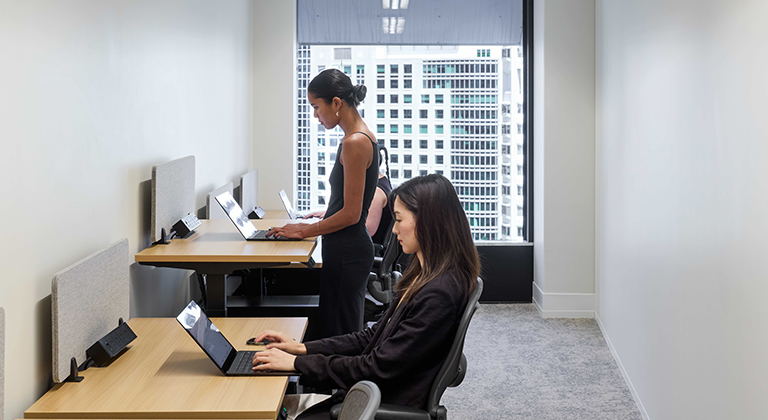
- Quiet environments for deep work — regaining focus after an interruption can take up to 23 minutes, making private, distraction-free spaces essential.
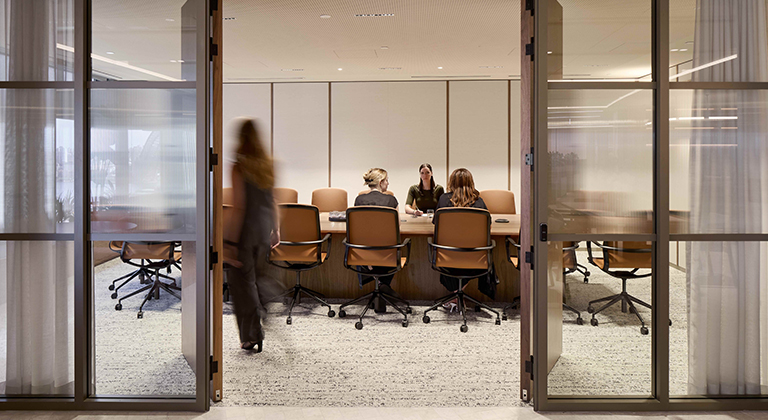
- Well-equipped meeting spaces — 85 % of leaders say hybrid work makes it harder to maintain alignment, highlighting the importance of meeting spaces with reliable video, audio, and shared collaboration tools.
- Intentional face-to-face proximity — Harvard Business School notes physical proximity significantly increases collaboration and knowledge exchange, particularly for complex problem-solving.
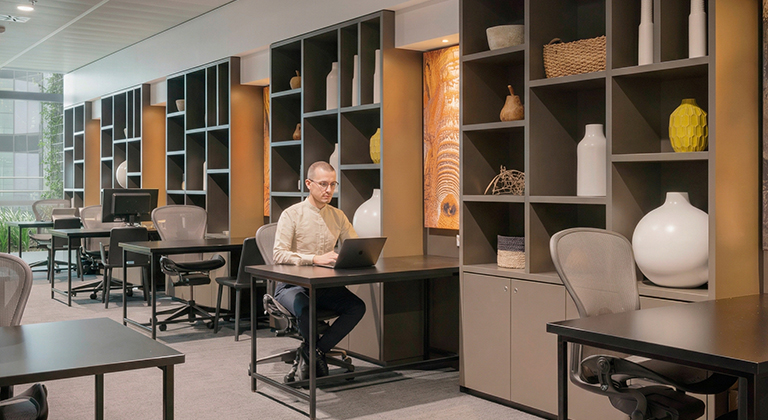
Across The Executive Centre's workspaces, this integration of space and behaviour is deliberate. Private Offices enable deep focus. Tech-enabled Meeting Rooms create seamless hybrid participation, so remote and in-person colleagues can engage as if they were side by side. Lounges spark conversation without forcing it. Even the lighting, acoustics, and layout are subtle guides, steering teams from focus to dialogue to creative thinking without conscious effort. Work becomes less about forcing attention and more about letting it flow naturally.
Bringing It All Together
Productivity in hybrid work is systemic. It emerges from the alignment of:
- Clear outcomes and measurable milestones
- Protected focus and deep work routines
- Clarity in communication and strong culture
- Energy-aware scheduling
- Thoughtful tools and structured flexibility
- Environments that match work type to space
When these pieces come together, flow, focus, and human energy become the currency of output. Teams don't just perform better — they feel better: sharper, more present, and energised in ways that ripple through their work.
Master the system, and productivity becomes inevitable, sustainable, and distinctly human.


