
Article
The Power of Cultural Localisation in Modern Workspaces

Every office speaks.
Not in words, but in cues: how people gather, where they linger, how conversations begin, how silence is respected. Long before an employee reads a mission statement or attends a leadership briefing, they absorb culture through space. And yet, too often, many offices are fluent in efficiency, but tone-deaf to people.
In a world of global teams, cross-border mobility, and culturally diverse leadership, that disconnect is no longer cosmetic. It shapes how people work, collaborate, and ultimately perform. Because culture doesn’t live only in people.
It lives in place.
Culture Is Built Into the Walls
A study published in the Journal of Environmental Psychology found that office layout features—like workstation equality, visual access, and architectural privacy—are significantly correlated with how employees perceive organisational culture, which in turn mediates job satisfaction and engagement.
A workplace with no private areas communicates that discretion or reflection carry little value. Vast executive offices beside compressed workstations reinforce hierarchy without a word being spoken. Endless open-plan floors promise collaboration, yet quietly drain focus and candour.
Offices are not just where work happens; they teach people how to work—signalling what matters, who belongs, and how people are expected to function within the organisation.
The Global Office Problem: One Size Fits None
As companies expand globally, many default to standardisation. The same layouts, materials, and spatial formulas appear from London to Singapore to Dubai. It feels efficient. Scalable. On-brand.
But people don’t experience work globally. They experience it locally. Culture shapes the flow of meetings, the expression of hierarchy, the interplay of privacy and collaboration, and much more.
Research on place identity shows that people form stronger emotional and psychological bonds with environments that reflect familiar cultural cues—spatial rhythms, sensory touchpoints, and social harmony. Ignore these cues, and the consequences are subtle but tangible. Friction seeps into interactions. Collaboration falters. Engagement wanes. Employees may not be able to explain why the space feels off—but they feel it, every day.
What Cultural Localisation Actually Looks Like
True localisation is subtle, thoughtful, and functional. It shows up in:
- how meeting spaces are arranged
- how formal and informal zones coexist
- how transitions between public and private feel
- how people instinctively know where they belong
Across TEC’s global network, fundamentals remain constant: prime locations, premium infrastructure, advanced technology, flexibility, and first-class service. What changes is expression—the layout, flow, and social logic tuned to how people in each culture meet, focus, collaborate, and connect.
What it looks like in practice:
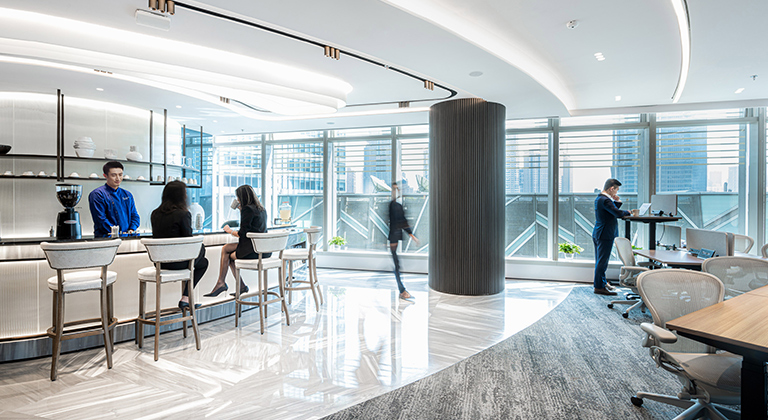
- In Singapore, multicultural teams bring diverse expectations of hierarchy, discussion, and decision-making into the same room. Spaces flex to match—zones for structured collaboration sit alongside areas for organic social connection, helping diverse teams work comfortably together.
- In Tokyo, spatial calm matters. Natural materials and subdued colour palettes reduce visual noise, while gentle transitions and clear wayfinding honour the city’s love of order, harmony, and unobtrusive flow.
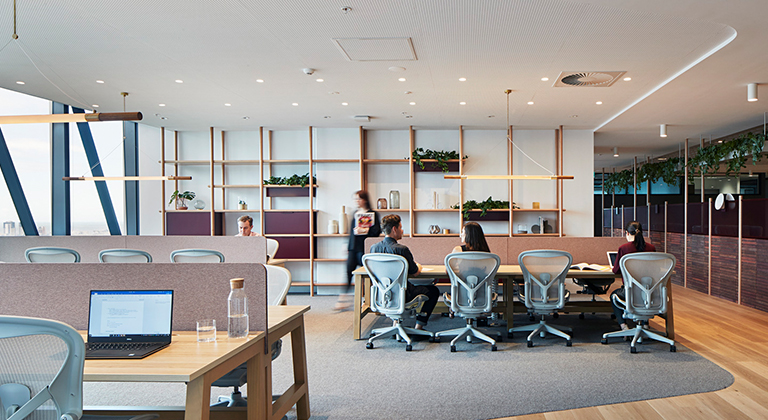
- In Melbourne, communal lounges echo local café culture—relaxed, social, mobile—inviting spontaneous connection and creative exchange.
- In Riyadh, meeting areas in TEC centres draw inspiration from the majlis tradition, where conversation and relationship come before transaction. Spaces are designed to invite presence and dialogue rather than immediate formality.
Even the smallest details are deliberate: how materials feel under your hand, how light flows through corridors, how communal areas sit at the intersection of social and work rhythms. Every choice reflects cultural habits and expectations, thoughtfully applied and informed by observation and feedback.
The result is a workspace that feels right—intuitive, respectful of local sensibilities, and truly centred on how work happens in that place.
Why Leaders Should Care
Culturally aligned spaces are measurable:
- 97% of employees say their workplace reflects how much their employer values them
- Nearly half report that their environment actively hinders productivity
- Environmental factors such as light, acoustics, and thermal comfort are directly linked to performance and wellbeing
Spaces that speak the language of their people reduce friction, make collaboration natural, and allow leadership intent to translate into daily behaviour without constant intervention. The office becomes a silent extension of leadership itself.
Is Your Office Speaking the Right Language?
An office that truly speaks the language of its people communicates:
- We understand how you work.
- We respect how you create value.
- We see you as individuals and as a community.
Spaces that don’t—no matter how shiny—feel interchangeable. And interchangeable spaces produce interchangeable experiences.
At TEC, we design workspaces that speak fluently across cultures, combining global standards with local intelligence to create environments where people can focus, connect, and perform at their best. Because when space aligns with culture, work stops feeling forced. It flows.
And when your office speaks the language of its people, organisations stop merely housing work—and start shaping it.


