
Article
India’s GCC Boom Is Changing the Office

India’s Global Capability Centre story used to be told mainly through cost, scale, and talent.
That story is now incomplete.
GCCs are increasingly handling artificial intelligence, engineering, analytics, product development, research, cybersecurity, and other work close to the centre of global business strategy. The office is no longer simply where a large support team sits. It is where specialised people collaborate, solve difficult problems, represent the company, and build products used around the world.
That shift is changing what companies need from an office in India.
A growing GCC needs more than desks in a convenient building. It needs the technology to support complex work, the quality to attract and retain talent, and the flexibility to expand without redesigning its workplace every time the business changes direction.
According to CBRE’s 2026 GCC research, GCCs leased more than 100 million square feet of office space in India between 2022 and 2025, accounting for around 39% of total office leasing activity in 2025.
India’s GCC boom is not simply creating demand for more offices. It is raising expectations of what an office should make possible.
What Is a GCC?
A Global Capability Centre, or GCC, is an operation established by a multinational company to perform specialised functions for its wider organisation.
These may include:
- technology and software engineering
- artificial intelligence and machine learning
- data science and analytics
- product development
- research and development
- cybersecurity
- finance, legal, and risk management
- global business services
GCCs are not the same as traditional outsourced service centres. Many now operate as strategic extensions of the parent company, with responsibility for innovation, product development, specialist expertise, and global transformation.
The work has changed. The workplace has to change with it.
From Back-Office Support to Strategic Capability
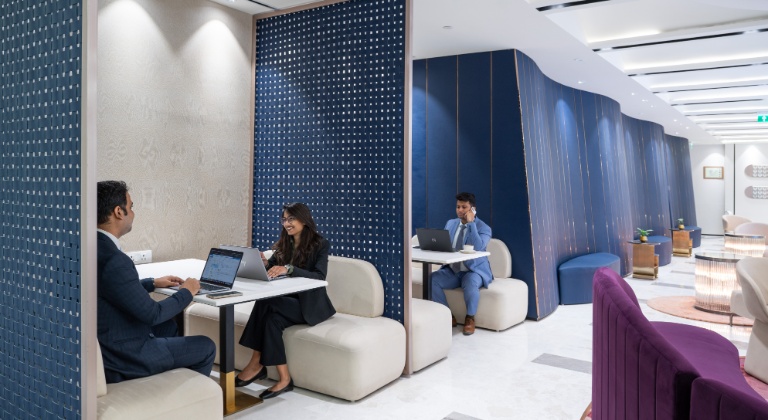
Many GCCs began with finance, customer support, shared services, and business processing. Those activities remain important, but they now sit alongside work that is closer to the centre of enterprise decision-making.
A team developing a global product needs different conditions from a team handling routine processing. It may need more collaboration areas, stronger technology, better privacy, space for workshops, and an environment that supports focused individual work as well as discussion.
The office has to accommodate both.
This is one reason GCC demand is extending beyond technology. Colliers’ 2026 GCC report identifies growing demand from banking, financial services, insurance, engineering, and other sectors. It also notes that Bengaluru and Hyderabad account for more than 60% of GCC space uptake.
As the work becomes more specialised, the office becomes part of the operating model, not simply a place to accommodate headcount.
The New GCC Office Has Three Jobs to Do
Support Complex Work
People need reliable connectivity, secure access, suitable meeting spaces, good acoustics, and technology that works without turning every meeting into a technical exercise.
They also need choice. A day of deep technical work, a project workshop, a confidential conversation, and a global video call should not all happen in the same kind of room.
That variety matters when a company is competing for specialised talent. A strong salary may attract someone to the conversation. The experience of working there helps determine whether they remain interested.
Make the Company Feel Present
For an international company establishing or expanding its presence in India, the office is one of the clearest physical expressions of what the organisation values.
It tells employees, candidates, clients, and partners whether the Indian operation is treated as an afterthought or as a serious part of the business.
That does not require an extravagant workplace. It requires a considered one. The right setting can make collaboration easier, create a stronger sense of belonging, and give a growing operation a credible place for interviews, client conversations, leadership visits, and cross-border work.
Leave Room for Change
GCCs do not always grow in a straight line. A business may begin with one function, add another, change its hiring plans, or move from delivery work into product and innovation.
An office that only works under one set of assumptions can become a constraint quickly. The question is not only, “How much space do we need?” It is also, “How much certainty do we have about what we will need next?”
Why Quality and Flexibility Are Moving Together
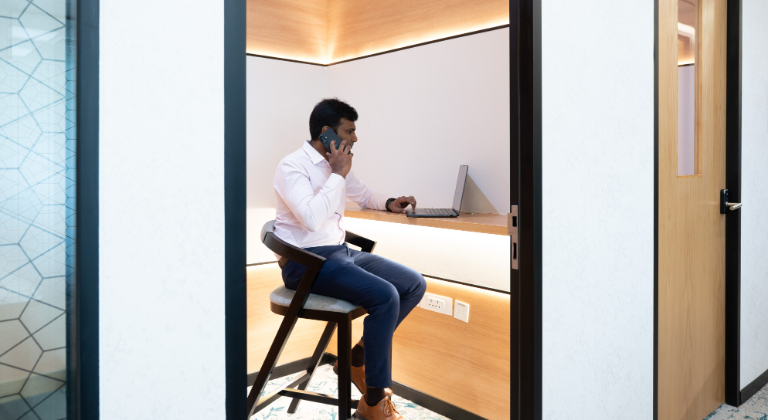
Quality and flexibility are often treated as opposites. One suggests a carefully designed, permanent workplace. The other suggests temporary desks and short-term arrangements.
In practice, the two are increasingly connected.
CBRE’s India office market research expects GCCs to drive more than 40% of India’s total office-space absorption in 2026, with flexible workspace, technology-led demand, and flight-to-quality preferences shaping occupier strategy.
At the same time, Cushman & Wakefield’s H1 2026 data shows that flexible workspace operators leased more than 191,000 seats across India’s top eight cities in the first half of the year. GCCs accounted for 44% of flexible-workspace demand during that period.
The appeal is not only speed, although speed matters. Flexible workspace can give companies access to professional infrastructure, established business locations, and a ready workplace while they test a market, build a team, or decide what their long-term office should become.
The best flexible workspace is not an empty room with a shorter contract. It should give a business a credible environment to operate in while preserving the ability to adjust.
The First India Office May Not Be the Final One
For a company entering India, the first office can feel like a statement of intent. It needs to signal commitment, support the initial team, and give the business a credible base from which to operate.
Yet early certainty is often the one thing a new operation does not have.
The company may still be working out how quickly it will grow, which functions it will build locally, and how its teams will work together. Committing immediately to a large, permanent office can make those unknowns more difficult, and more expensive, to manage.
A phased approach can make more sense. Across India, The Executive Centre (TEC) supports companies at different stages of expansion, from initial leadership teams and project groups to larger operations that need a more tailored Managed Office. The starting point might be a Private Office for a small leadership team, Meeting Rooms for interviews and client conversations, or Coworking access for a project group or employees working locally.
Starting smaller does not mean thinking smaller. It means choosing a workspace that fits what the business knows today, while keeping the next move open.
This is not about keeping a business permanently provisional. It is about making early decisions that do not close off better decisions later. The same principle applies to an established India operation opening in a second city, building a temporary project team, or creating additional capacity during a period of expansion.
Five Questions to Ask Before Choosing a GCC Workspace
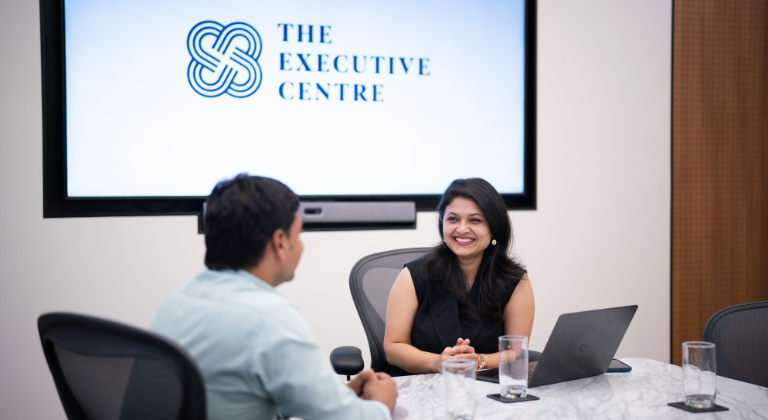
The right office depends on more than headcount. Before committing to a workplace, companies should consider five questions.
What Work Will the Team Actually Do?
A delivery team, engineering group, leadership team, and research function may all need different environments.
Map the work before choosing the layout. How much time will people spend on focused work, collaboration, video meetings, workshops, client conversations, and informal interaction?
The answer should shape the balance between desks, meeting rooms, private areas, and shared spaces.
How Quickly Might the Operation Change?
If hiring plans are still moving, avoid treating an early forecast as a permanent truth.
Consider whether the workspace can expand, contract, or support teams across more than one city. A workplace should be able to absorb change without making every change feel like a relocation.
What Does the Location Do for the Business?
Location affects more than the commute.
It shapes access to talent, the experience of visiting clients and partners, the ease of leadership travel, and the company’s relationship with the wider business community.
The right city will depend on the talent the business needs, the work it plans to do, and the role India will play in the wider organisation.
What Must Be Consistent Across Locations?
A multi-city operation needs more than several offices. It needs a consistent standard.
Technology, access, meeting infrastructure, hospitality, privacy, and workplace experience all affect how connected teams feel. Consistency does not require identical design. It requires a dependable baseline.
What Should the Office Say About the Company?
A GCC may be competing for talent against global companies with sophisticated workplaces. The office should reflect the seriousness of the work being done there.
That might mean a strong business address, thoughtful design, professional reception, reliable technology, or spaces where people can meet clients and senior leaders with confidence.
The details matter because they shape how the operation is perceived.
Flexible Workspace Is Becoming Part of the Office Strategy
Flexible workspace is sometimes presented as the alternative to a traditional office. For many GCCs, it is more useful to see it as part of a broader office strategy.
It can support a company at several points in its growth:
- establishing an initial India presence
- housing a leadership or market-entry team
- accommodating a project team
- supporting a second city
- providing space during recruitment or expansion
- creating a temporary base while a permanent office is planned
- giving employees access to a professional workplace closer to where they live
The appeal is the ability to match the workspace to the stage of the business. A company does not need to choose between an improvised temporary setup and a fully built-out headquarters on day one.
It can establish a serious presence, learn from how the team works, and make the larger commitment when the business has better information.
The GCC Office Is Becoming a Business Decision
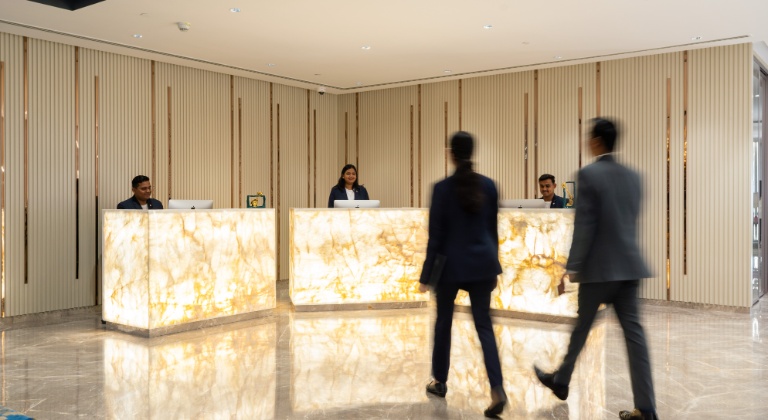
India’s GCC boom is often discussed through the language of leasing, headcount, and square footage. Those measures matter, but they do not tell the whole story.
The more important question is what the office enables.
Can it help a company attract people with scarce skills? Can it support work that requires concentration, collaboration, and trust? Can it make an international business feel genuinely present in India? Can it evolve when the business does?
The office is no longer a container for the GCC. It is part of the GCC’s operating model.
As India’s Global Capability Centres move further into product development, research, engineering, analytics, and innovation, the companies that plan their workplaces around those ambitions will be better placed to grow.
The most effective office may not be the largest one, or even the most permanent one at the outset. It will be the one that gives the business enough quality to move forward, and enough flexibility to keep moving.
Frequently asked questions
A Global Capability Centre, or GCC, is an operation established by a multinational company to perform specialised functions for its wider organisation. These may include technology, engineering, analytics, finance, research, product development, cybersecurity, and other strategic activities.
India offers access to a large talent pool, established technology and business ecosystems, and a strong base of office and infrastructure options. GCCs are also becoming more strategic, with many companies using their India operations for technology, innovation, research, and product development.
GCCs increasingly need high-quality, technology-enabled workplaces that support focused work, collaboration, hybrid meetings, privacy, employee experience, and future expansion. A standard desk-based office may not suit teams carrying out complex, specialised work.
Not always. Some companies begin with a smaller office or flexible workspace while they build a local team and refine their operating model. As the business becomes clearer, they may move into a larger or more customised workplace.
Bengaluru and Hyderabad remain major GCC markets, while Mumbai, Delhi NCR, Chennai, and Pune also play important roles. The right city depends on the company’s talent requirements, industry, customers, leadership access, and expansion plans.
Yes. Across India, The Executive Centre supports companies at different stages of expansion, from initial leadership teams and project groups to larger operations requiring a more tailored Managed Office. The right arrangement depends on the company’s team size, location, timeline, privacy requirements, and long-term workplace strategy.
It can. TEC has centres across key Indian business markets, including Mumbai, Bengaluru, New Delhi, Gurgaon, Chennai, Hyderabad, and Pune. This can help companies maintain a consistent workplace experience as their India operations expand.
Yes. A company can use a Private Office, Coworking, or Meeting Rooms while it assesses its hiring plans, location requirements, and long-term office strategy. This allows the team to operate from a professional base while the larger workplace decision takes shape.


