
Article
Singapore FWA for Employers: How to Plan the Right Hybrid Workplace

Flexible work does not remove the need for an office. It raises the standard for one.
When employees are in the office every day, the workplace can be designed around a relatively predictable pattern. Hybrid work is different. One person may need a quiet workstation. Another may need a meeting room for a client presentation. Someone else may only need somewhere professional to work once a week.
The question is no longer simply how many desks a business has.
It is whether the workplace supports the work people need to do when they are there.
Singapore's Tripartite Guidelines on Flexible Work Arrangement Requests, or TG-FWAR, give employees a formal process for requesting flexible work arrangements. For employers, the guidelines bring greater structure to the request process, but they do not prescribe one office model.
That part remains a workplace decision.
Singapore FWA Guidelines: What Employers Need to Know
The TG-FWAR took effect on 1st December 2024.
In practical terms:
- The guidelines cover formal FWA requests.
- Employees who have completed probation can submit a formal request.
- The three categories are flexi-place, flexi-time and flexi-load.
- Employers should provide a written decision within two months.
- Employers do not have to approve every request.
- Rejections should be based on reasonable business grounds.
Flexi-place covers changes to where someone works, such as working from home or another suitable location. Flexi-time covers changes to working hours while generally maintaining the same total hours. Flexi-load covers changes to workload, usually with a corresponding adjustment to remuneration.
Employers may reject a request where it would create a significant increase in cost, reduce productivity or output, affect customer needs, or prove impractical because of the nature of the role.
The important distinction is that the TG-FWAR governs how requests should be considered. It does not mean every employee must work from home, and it does not mean every request must be approved.
For more detail, employers can refer to TAFEP's Guide to Managing Flexible Work Arrangement Requests.
How Should Employers Plan Workspace for Hybrid Teams?
The same attendance pattern can create very different workspace needs.
Consider a team that comes into the office three days a week. One employee needs a reliable workstation for focused work. Another spends most of the day in client meetings. A third comes in mainly to collaborate. Someone else handles confidential information.
They may all be in the office on the same days. They do not need the same environment.
A useful workplace plan connects three things:
- The flexible arrangement that has been agreed.
- The work the employee needs to carry out.
- The type of space that supports that work.
| Employee Requirement | Workspace to Consider |
|---|---|
| Occasional office presence | Hot desk or flexible coworking access |
| Regular hybrid attendance | Dedicated desk |
| Focused or confidential work | Private office or enclosed meeting room |
| Client meetings and presentations | Meeting rooms |
| Occasional need for a private office | Day office |
These are not fixed categories. A person may move from occasional coworking access to a dedicated desk as their attendance increases. A growing team may later need a private office. The workplace should be able to accommodate those changes without forcing every employee into the same arrangement.
Is a Dedicated Desk Right for Regular Hybrid Work?
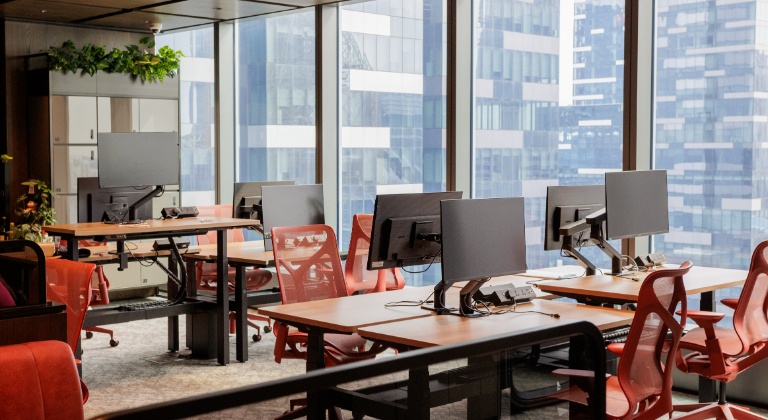
A dedicated desk can be a practical middle ground between open coworking and a private office.
A hot desk provides flexibility. It suits occasional users, visiting employees, contractors and people whose schedules vary from week to week.
A dedicated desk provides a consistent base. For someone who works from the office regularly, that can mean less time spent finding a suitable workstation and less repeated setup at the start of the day.
It may also make hybrid work feel more settled. The employee has a reliable place to work, while the business avoids assigning an enclosed office to someone who does not need one.
For employers considering a dedicated desk in a Singapore coworking space, the practical question is not simply whether a desk is available. It is whether the arrangement gives the employee enough consistency for their role without creating more space than the business needs.
The distinction is simple:
- A hot desk prioritises flexibility.
- A dedicated desk prioritises consistency.
- A private office prioritises privacy.
Plan Around Peak Days, Not Average Occupancy
Average attendance can conceal the pressure points in a hybrid workplace.
If Tuesday and Wednesday are the busiest days, a workplace planned around average monthly occupancy may still feel crowded when most employees arrive. Desks may be available, but meeting rooms may not be. Quiet areas may disappear. Employees may be present without having the right conditions for their work.
Employers reviewing their workspace should look at:
- Peak attendance days.
- Team schedules and co-presence.
- Client-facing days.
- Meeting room demand.
- Demand for quiet or confidential space.
- New joiners and temporary project teams.
The relevant question is not just how many people are present. It is what they need to accomplish.
Protect the Work That Needs an Office
The office is not only a place for collaboration.
Some work requires privacy. Some depends on reliable technology. Some benefits from a professional environment that is difficult to recreate at home.
| Type of Work | Workspace Requirement |
|---|---|
| Focused individual work | Quiet workspace or dedicated desk |
| Client presentation | Meeting room |
| Confidential conversation | Private office or enclosed meeting room |
| Video call | Phone booth or private room |
| Team discussion | Shared meeting or collaborative space |
Reducing desk numbers without considering these requirements can create a less useful workplace, even if the occupancy figures look more efficient.
Make the Workplace Flexible Enough to Evolve
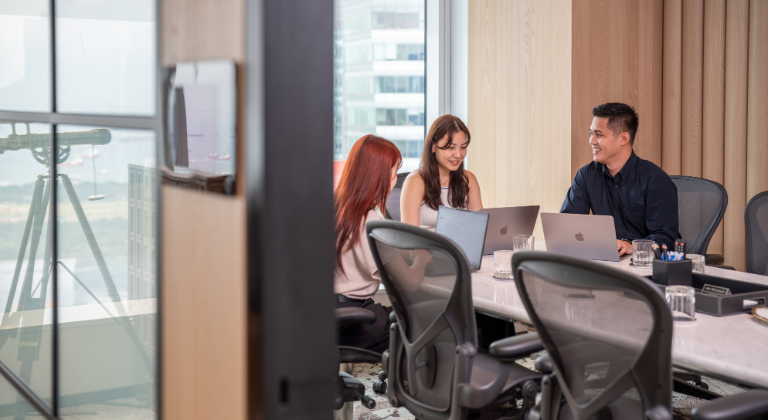
Flexible work arrangements are rarely static. Teams grow, projects change and employees move between different working patterns. The workplace should be able to respond without requiring a full office redesign.
The Executive Centre's Coworking plans in Singapore include:
| Plan | Includes | Starting from |
|---|---|---|
| City Pass | City-wide workspace access | SGD 540/month |
| Global Pass | Access across TEC's global network | SGD 585/month |
| Dedicated Desk | A reserved workspace | SGD 855/month |
Prices vary by location and reflect discounted rates with a 12-month commitment.
For work that requires greater privacy or formal collaboration, separate Private Office and Meeting Room options are also available.
A Practical Employer Checklist
Before introducing or revising an FWA policy, employers should ask:
- Is there a clear process for submitting and assessing formal FWA requests?
- Are decisions based on the requirements of the role and the effect on the business?
- Do employees understand when they are expected in the office and what those days are for?
- Is there enough of the right type of space on peak days?
- Can employees handle confidential work appropriately?
- Can the workplace adapt as teams, roles and attendance patterns change?
The last question is often the most revealing.
A workplace designed only for today's headcount may already be limiting tomorrow's options.
The Office Is Still Part of the Flexible Work Strategy
Flexible work is not about removing the office. It is about making its purpose clearer.
The right model gives occasional users freedom, regular hybrid workers consistency and teams privacy when it matters. It gives employers a workplace that supports present needs without locking the business into yesterday's shape.
Frequently asked questions
Yes. The TG-FWAR applies even when an organisation's default arrangement is office-based. It provides a process for considering formal requests, but does not determine the outcome of every request.
For the latest requirements, refer to the Ministry of Manpower's FWA guidance.
Yes. Employers may create their own form or process, provided it is communicated clearly and allows formal requests to be properly considered. TAFEP provides templates and guidance that employers can adapt to their organisation.
The TG-FWAR generally applies to formal requests for flexible work arrangements within Singapore. It does not require employers to approve requests to work from overseas.
Employers should assess overseas arrangements separately, taking the nature of the role and the organisation's business requirements into account. The MOM FAQ on flexible work arrangements provides further guidance.
Yes. TEC Dedicated Desk Members have 24-hour access to their selected centre. Members with City Pass and Global Pass plans can access eligible TEC Centres across Singapore with their access card.
Access remains subject to the terms of the relevant plan and centre.
Yes. TEC's Day Office provides access to a secure, lockable Private Office for short-term use, subject to availability. It is designed for people who need privacy and a dedicated working environment without taking a permanent Private Office.
Day Office plans can be booked through the MyTEC app.
Yes. TEC Meeting Rooms are available to both Members and non-Members. They can be used for client meetings, interviews, presentations, workshops and other professional gatherings.
Room sizes and availability vary by centre. Employers can explore TEC Meeting Rooms in Singapore to find a suitable location and format.


