
Article
What Leadership Looks Like When Your Team Can Legally Ask to Stay Home

- The Fair Work Ombudsman’s new Clerks Award guidance confirms that, from the first full pay period starting on or after 26th October 2026, covered employees can formally request to work from home. It is a right to request, not a guaranteed remote arrangement.
- Any agreement is individual and must record the working pattern, location, start date, and terms for changing or ending it.
- The right to disconnect has applied to employees of small business employers since 26th August 2025.
- The Fair Work Commission’s generative AI guidance takes effect on 20th October 2026.
- The RBA cash rate is 4.60%, effective from 30th September 2026, the highest level since late 2011.
- The Property Council of Australia’s latest figures show the market separating by quality and purpose: national office vacancy reached 16.1% in the first half of 2026, while premium-grade vacancy was 10.2%.
Leadership is easiest when authority is simple. Everyone is in the room, the hours are visible, and the office does the persuading for you.
That arrangement is gone.
From the first full pay period starting on or after 26th October 2026, employees covered by the Clerks Award can formally request to work from home. At the same time, the RBA cash rate is 4.60%, office vacancy is high overall, and demand is tighter at the premium end.
The question is no longer whether the office should exist. It is what the office is for, and whether leaders can make the answer convincing.
Authority Changed. What Now?
The Clerks Award now includes a formal process for employees to request working-from-home arrangements.
The request must be made in writing and specify the days, number, proportion, or pattern of days the employee proposes to work from home. If the employer and employee agree, the arrangement must also be recorded in writing, including the location, start date, any modified award terms, and how the arrangement can be varied or ended.
The distinction matters. This is a formal right to request, not a guaranteed right to work from home. It also sits alongside the separate flexible working arrangements available under the National Employment Standards, which have their own eligibility rules and response requirements.
This is not a work-from-home debate. That debate closed. What remains is a leadership test with legal edges. A request needs a considered response, an office requirement needs a reason, and an inbox ping at 9pm needs a clear understanding of what happens out of hours.
The leaders who thrive in this phase share a trait seldom listed in competency frameworks: they write things down. Standards, response times, office rhythms, and review dates are easier to manage when they are visible to everyone.
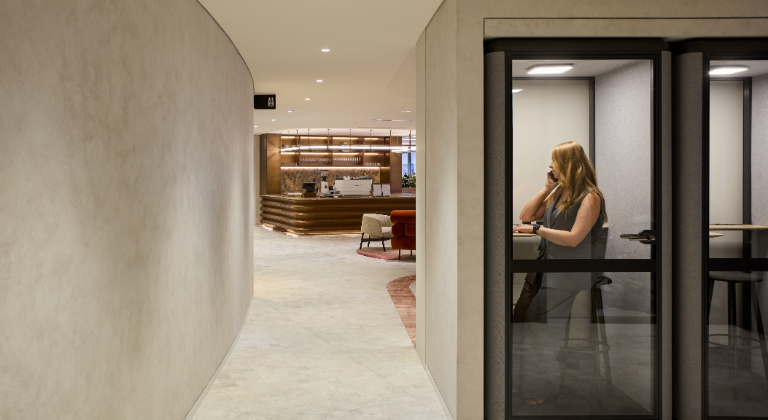
Five Qualities That Carry Weight Now
- Clarity Before Charisma
Teams grant effort where they see purpose, but purpose without specifics breeds drift.
Strong leaders state the standard clearly: what good looks like, when it needs to be delivered, and how it will be checked. They also explain which work belongs together, which decisions need live discussion, and which activities can happen independently.
Set a small number of predictable office anchors, such as client meetings, critique sessions, or decision forums. Name them, protect them, and let the rest flex where it can.
They repeat the standard until it sounds dull, because dull scales and clever does not.
- Judgement on Flexibility Requests
A request to work from home should not become a test of loyalty.
Treat it as a design task. Consider the role, the work involved, client confidentiality, team dependencies, access to coaching, and the way the arrangement will be reviewed. A blanket yes may erode the team, while a blanket no may ignore the work, the request, and the obligations that apply.
The same reasoning should be applied to comparable roles. A decision that feels arbitrary will damage trust, even if the policy itself is lawful. Consistency is what makes the process credible.
- Restraint With AI and Monitoring
Artificial intelligence now sits inside recruitment, performance notes, investigations, and employment disputes.
The Fair Work Commission’s new guidance on using generative AI in Commission cases applies from 20th October 2026. The broader leadership lesson is straightforward: no AI-generated summary should stand alone. A human checks the source, preserves the context, and owns the decision.
The same discipline applies to monitoring. Activity data may show when a system was accessed, but it cannot explain the quality of a decision, the difficulty of a negotiation, or the contribution made in a room where no software was watching.
Teams notice whether you lead people or process logs.
- Composure Under Rate Pressure
The RBA cash rate is 4.60%, effective from 30th September 2026. Boards ask harder questions, hiring slows, and each fixed commitment receives more scrutiny.
Composed leaders cut theatre before they cut talent. They question the half-used floor before they lose the half-built team, move fixed cost to variable cost where the work allows, and defend the roles that drive revenue with clean numbers.
That does not mean making every decision smaller. It means making the relationship between cost and outcome clearer. Staff read calm as competence, while panic emails at midnight undo a year of culture work.
- Presence That People Choose
Situational leadership adds another question to every piece of work: where should this conversation happen?
Bad news, complex trade-offs, first meetings, and important coaching conversations may earn a room. Routine status updates may not. Leaders who force the wrong medium pay in attention.
The office day should contain what home cannot provide easily: live critique, fast decisions, unplanned counsel, shared pressure before a pitch, and the small interactions through which people learn how experienced colleagues think.
Presence has value when it improves the work.
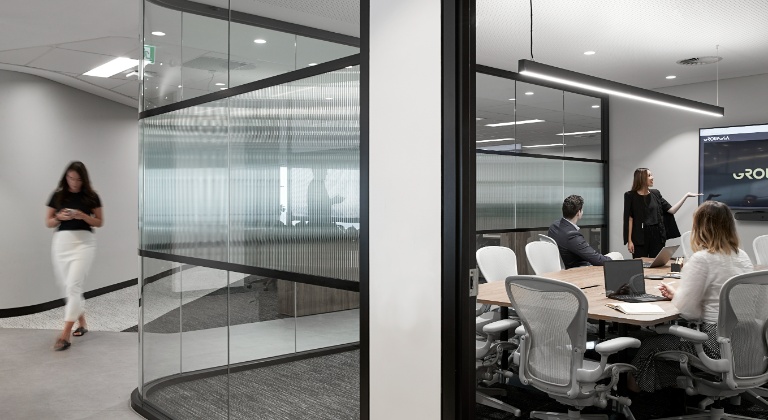
The Mandate That Survives a Formal Request
An office-first policy can still stand, but it needs to be grounded in tasks rather than preference.
Client confidentiality may require controlled rooms. Junior development may benefit from observed practice. Deal speed may depend on having the right people around the same table. Write each reason against the relevant role family, then separate what the role requires from what the applicable employment process requires.
A request under the Clerks Award is different from a request under the National Employment Standards. One template should not be used to answer both.
Every arrangement should also define deliverables, working hours, response windows, and review dates. Review dates matter most because they allow both sides to test whether the arrangement is working rather than treating an initial agreement as permanent.
“Because we prefer it” is not a leadership system. A clear standard, applied evenly, is.
Leadership Under a 4.60% Cash Rate
At 4.60%, every fixed cost has to explain itself. Office space is no exception. The RBA’s cash rate is now at its highest level since late 2011, and the question for leaders is no longer simply how much space the business occupies.
It is what that space makes possible.
Client confidence, confidential conversations, faster decisions, better coaching, and more effective collaboration all have value. A large footprint does not, by itself. Nor should a business keep paying for space that reflects the headcount it once expected rather than the team it actually has.
The sensible response is not to retreat from the office altogether. It is to make the workplace follow the work. Keep a credible base for the activities that need continuity, make capacity adjustable as the team changes, and reserve the best settings for the moments that benefit from being together.
This is not a product argument. It is arithmetic at 4.60%.
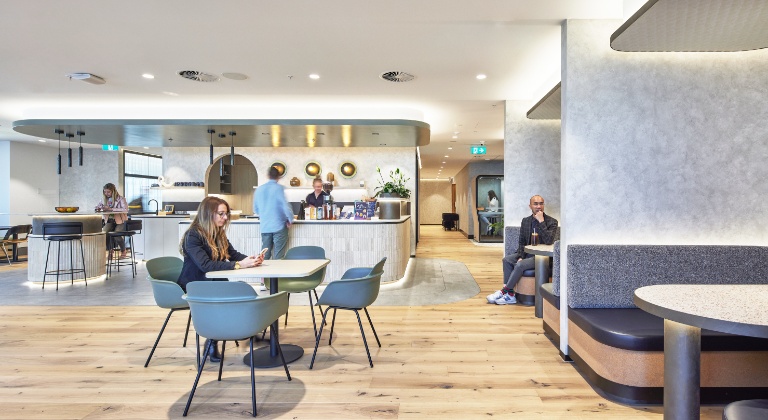
The Office Day Must Earn Its Keep
Staff now weigh the commute against a legal and practical alternative. An office day full of video calls and solitary work is a poor bargain. Leaders must make the journey worthwhile by concentrating the work that benefits from being together: live critique, fast decisions, informal counsel, shared preparation before a pitch, and difficult conversations that need more than a screen.
Set the purpose of the day in advance, bring together the people who need to be there, and leave with clear decisions and named owners. People return where they feel sharper at 5pm than at 9am.
Some teams can create that environment in their own office. Others need a base where the essentials are already in place. Across Sydney, Melbourne, and Perth, The Executive Centre (TEC) combines flexible workspace with secure, high-speed IT, high-performance AV, ergonomic workspaces, premium amenities such as barista-made coffee and business lounges, and dedicated on-site support.
A Private Office gives a core team room to focus, while Meeting Rooms give client reviews, planning sessions, and important decisions the setting they deserve. The benefit is fewer compromises on the days that matter.
Explore TEC’s Australia locations for office days designed around the work.
Frequently asked questions
The most important qualities are clarity, fair judgement, restraint with AI and monitoring, composure under cost pressure, and presence that earns attendance. Hybrid teams need leaders who make expectations visible and use flexibility deliberately.
Yes. From the first full pay period starting on or after 26th October 2026, employees covered by the Clerks Award can make a written request to work from home. The request must specify the proposed days or pattern. Fair Work’s guidance on the new Clerks Award rules sets out the requirements.
No. It creates a formal right to request a working-from-home arrangement. The employer and employee must agree, and any agreement must be recorded in writing.
An employer may set attendance expectations, but the policy should be consistent with the employee’s contract, applicable award, enterprise agreement, the National Employment Standards, and other workplace obligations. The strongest policies explain what work requires presence and apply the approach consistently.
Employees may refuse to monitor, read, or respond to employer or third-party contact outside their working hours unless doing so is unreasonable. The right has applied to employees of small business employers since 26th August 2025 and to employees of non-small business employers since 26th August 2024. Fair Work’s guidance on the right to disconnect explains how the rules operate.
AI can help organise information, but it should not make employment decisions or produce records that no one checks. Leaders should verify the source material, protect confidential information, preserve context, and take responsibility for the final decision.
A useful policy should explain eligibility, how requests are made, which work requires in-person participation, expected office rhythms, working hours, response windows, review dates, and how the arrangement can be changed or ended.
Give each office day a clear purpose. Use it for collaboration, coaching, client work, complex decisions, and conversations that benefit from being together. Share the agenda in advance, invite the right people, and end with clear decisions and owners.


