
Article
Office Relocation in Hong Kong: Costs, Checklist & Project Plan

Relocating an office in Hong Kong requires detailed planning, precise coordination, and a strong understanding of every financial and operational element involved. From estimating office relocation costs to developing an actionable office relocation project plan and executing a thorough office relocation checklist, each stage demands careful attention. With the city’s fast-paced business environment and competitive real estate market, proper preparation is essential to ensure a smooth transition and minimal disruption to daily operations.
This guide provides a comprehensive framework, addressing every critical stage to ensure your transition is as smooth and cost-effective as possible. We focus on providing actionable insights that reflect the unique challenges of moving a business in Hong Kong.
Introduction: Office Relocation and Its Importance in Hong Kong
Office relocation in Hong Kong is more than a logistical process—it is a pivotal business decision that can influence productivity, company culture, and long-term growth. In a city renowned for its fast-paced economy and premium commercial real estate, a well-planned office move in Hong Kong can reflect expansion, innovation, or a strategic shift toward more flexible and efficient work environments.
Beyond finding a new address, workspace relocation provides an opportunity to reimagine how teams collaborate and how the physical environment supports business goals. It allows organisations to enhance brand image, improve accessibility, and attract top talent while aligning the workspace with evolving operational needs.
However, the importance of thorough preparation cannot be overstated. Without careful planning and coordination, even a small disruption can lead to operational downtime, increased costs, and a decline in employee morale—making strategic foresight essential for a successful transition.
Read the full article: Company Registration Number and Business Registration Number in Hong Kong
Typical Office Relocation Costs: Planning, Moving, Renovation, and Hidden Expenses
Understanding the full scope of office relocation costs is the first step towards a financially viable move. The total expense is a multifaceted figure, often significantly higher than initial estimates due to various components:
- Property Costs: This includes rent for the new space, security deposits, agent commissions, legal fees, and often a period of overlapping rent payments.
- Moving and Logistics: Professional movers in Hong Kong charge based on volume and complexity. Costs also cover packing materials, insurance, and specialist handling for IT equipment or sensitive documents. Getting detailed quotes is essential for managing moving expenses effectively.
- Fit-out and Renovation: Whether it’s a full build-out or minor modifications, renovation expenses—including interior design, construction, M&E works, and furniture procurement—are usually the largest single cost component.
- IT and Systems Setup: Migrating and reinstalling servers, network infrastructure, phones, and essential hardware is a non-negotiable expense. Downtime reduction strategies should be costed here. Look for service providers offering amenities like High-Speed Wi-Fi / Internet in their packages.
- Hidden Expenses: Be aware of potential pitfalls such as penalties for breaking an old lease, cost overruns in construction, unexpected utility setup fees, and potential overtime for staff involved in the move. A robust contingency fund is a critical part of financial planning for any office move. Thorough financial planning will help anticipate and mitigate these escalating costs.
Essential Office Relocation Checklist for a Seamless Transition
A detailed office relocation checklist transforms a daunting task into a series of manageable steps. This checklist ensures that no critical detail is overlooked, from pre-move planning to post-move settling-in.
Pre-Move Planning (12 - 6 Months Out)
- Finalise the new location and sign the lease.
- Appoint an internal project manager and the core relocation team.
- Determine the budget, focusing heavily on accurate office relocation costs.
- Select a professional design firm and moving company.
- Communicate initial plans to all staff.
Mid-Move Execution (6 - 1 Months Out)
- Manage the renovation/fit-out of the new office space.
- Order new furniture and IT hardware. Consider options like Function Rooms or Hot Desking areas.
- Liaise with utility providers (internet, phone, electricity) to ensure services are activated.
- Update all business stationery, website, and legal documents with the new address.
- Commence decluttering and archive organisation.
Final Transition (1 Month to Move Day)
- Finalise the moving day schedule and floor plans, including layouts for Meeting Room(s) and collaborative areas.
- Back up all critical data and test the new IT infrastructure.
- Assign moving crates and labels to every employee and department.
- Organise an official final walkthrough of the new space.
- Ensure the building management in both locations is fully aware of the move details.
A systematic office relocation checklist could minimise disruption and help track all moving components.

Learn how it works: Ecosystem for Startups in Hong Kong: Meaning & Diagram
Creating an Office Relocation Project Plan: Timelines, Tasks, and Team Roles
A formalised office relocation project plan is the backbone of a successful transition. It should break the entire process into distinct phases, assign clear ownership, and define precise milestones.
| Phase | Timeline | Key Tasks | Assigned Team/Role |
|---|---|---|---|
| I. Strategy & Planning | 12 - 9 Months | Define requirements, secure funding, finalise office relocation costs | Project Sponsor/Finance |
| II. Site Selection & Lease | 9 - 6 Months | New location search, negotiation, lease signing (Consider a serviced office or shared office for flexibility) | Real Estate/Legal |
| III. Design & Build | 6 - 3 Months | Interior design, construction, permit acquisition, including rooms like Meeting Room(s) | Project Manager/Contractors |
| IV. Pre-Move Logistics | 3 - 1 Months | IT setup, vendor coordination, staff communication, office relocation checklist execution | IT/Operations/HR |
| V. The Move | 1 Week | Physical move, IT cutover, final checks | Moving Team/IT |
| VI. Post-Move & Review | 1 Month | Settling in, reviewing budget, ensuring amenities are established | Project Manager/All Staff |
The project plan must be dynamic, allowing for necessary adjustments. Clear communication between the project manager and the assigned functional teams (IT, HR, Operations, Finance) is critical for managing the timeline and avoiding project delays.
Mistakes to Avoid and How to Ensure Business Continuity During the Move
One of the most critical aspects of a successful relocation is preempting common pitfalls. Here are the mistakes to avoid during your office move in Hong Kong:
- Underestimating Complexity: Failing to grasp the complexity of local logistics, especially the time required for government permits and construction approvals.
- Budget Shortfall: Underestimating the full extent of all relocation costs and failing to allocate a sufficient contingency fund for unexpected overruns.
- Poor IT Planning: Neglecting to schedule a staged IT cutover or failing to adequately test the new space's infrastructure before the move day.
- Communication Breakdown: Insufficiently communicating the office relocation project plan and disruption plans to employees, clients, and key vendors.
To ensure business continuity during the move:
- Prioritise IT Migration: Schedule a staged IT cutover, ensuring essential systems are running in the new location before the main move. Check that the new space is equipped with reliable High-Speed Wi-Fi / Internet. Have a robust data backup and a temporary remote work setup as a fail-safe.
- Communicate effectively: Use the office relocation project plan to keep all stakeholders—employees and vendors—informed about the schedule and any planned service downtime.
- Assign Department Coordinators: Designate departmental leads responsible for packing, labelling, and overseeing the smooth transition of their team's assets, cross-referencing against the comprehensive office relocation checklist.
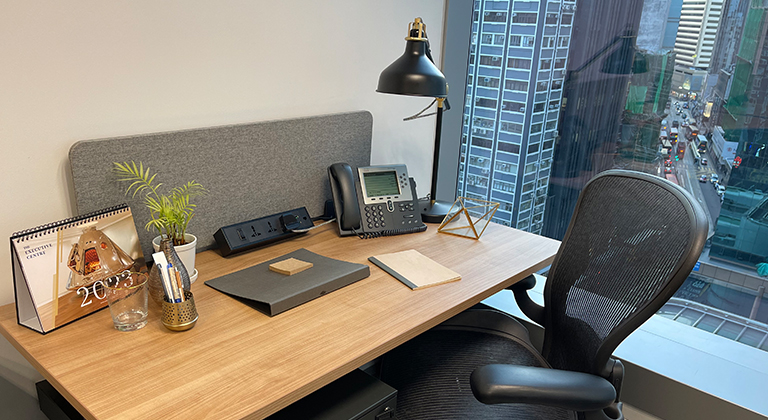
Discover TEC’s Premium Offices and Relocation Support in Hong Kong
Managing an office move can be complex and time-consuming. The Executive Centre streamlines the process with premium, fully furnished, and IT-ready serviced offices in Hong Kong’s most prestigious business districts. Whether you’re looking for a flexible workspace or Private Office, TEC offers scalable layouts and adaptable lease terms designed to grow with your business.
Our expert team provides end-to-end relocation assistance—helping you manage office relocation costs, streamline your office relocation project plan, and complete every step of your office relocation checklist with ease. With TEC, your new workspace is not only move-in ready but also thoughtfully tailored to support your evolving business needs. From access to the TEC Community to dedicated Business Concierge Services, we ensure your transition is seamless and strategic.
Contact The Executive Centre today to discover how our flexible office solutions can simplify your relocation and empower your business growth.
Explore related insights → Requirements for Registered Office Address in Hong Kong
Frequently asked questions
The best time is typically between late spring and early autumn when weather conditions are stable and moving companies have greater availability for scheduling. Your company should plan the office relocation project ahead of time.
Most relocations take between 2 to 6 months, depending on office size, lease terms, renovation needs, and the complexity of IT and logistics coordination. At TEC, our serviced offices are available on flexible terms, starting from just one month.
No, you do not need prior government approval to physically move. However, you are legally required to notify the Inland Revenue Department within one month of your change of address to update your Business Registration. Furthermore, any fit-out or renovation work must strictly comply with the Buildings Department’s safety and fire regulations.
A well-planned relocation can enhance comfort, accessibility, and collaboration by creating a modern, flexible workspace aligned with employee needs and company culture.
You must balance office relocation costs with strategic value. Key factors include accessibility for clients and staff (transport links), the quality of building management, and the flexibility of the lease terms to accommodate future growth. An address in a prestigious district can also significantly enhance your brand's credibility.


