
Article
How to Start a Business in Riyadh: Exploring Business Opportunities in Riyadh for Foreigners

Riyadh is transforming into a global business hub under the Saudi Vision 2030 framework, driven by large-scale economic reforms and a national strategy aimed at diversifying the economy beyond the oil sector. This shift is reshaping market demand across finance, technology, and tourism, resulting in a significant expansion of business opportunities in Riyadh for foreigners. As the regulatory landscape evolves, these prospects have become a central component of international growth strategies.
The following analysis examines the most realistic pathways for international entrepreneurs entering the Saudi market. This guide outlines how to start a business in Riyadh, covering core setup steps, key regulatory considerations, and the operational basics required to run locally.
Why Riyadh? The Economic Engine of the Middle East
Saudi Crown Prince Mohammed bin Salman (MBS) has outlined a major development plan for Riyadh, aiming to place the city among the world’s leading destinations in quality of life, tourism, and service industries, while expanding its population from roughly 7.5 million to 15–20 million by 2030.
This trajectory is not merely a headline target—it signals sustained demand and long-cycle growth across infrastructure, real estate, and industrial sectors. A key implication is the expansion of business opportunities in Riyadh as the city scales its service and tourism capacity. Why choose Riyadh? The rationale comes down to three fundamentals:
The Regional Hub Advantage (RHQ Program)
Led by MISA and the Royal Commission for Riyadh City, the Regional Headquarters (RHQ) Program positions Riyadh as the Kingdom’s operational hub for regional decision-making. Supported by the 2024 procurement policy reforms, this shift has made business opportunities in Riyadh more tangible and accessible. To navigate this, common operational needs often include:
- Corporate Governance & Compliance: Providing essential support for licensing, MISA portals, corporate structuring, and ongoing regulatory workflows.
- Strategic Professional Services: Delivering specialised legal, financial, and contract services tailored to Saudi Arabia’s evolving procurement and vendor onboarding standards.
- Human Capital & Localisation: Managing the end-to-end recruitment, payroll, and "Saudization" (localisation) requirements necessary for operational compliance.
- Managed IT & Digital Operations: Supporting initial IT setup, baseline cybersecurity, and enterprise cloud operations to keep day-to-day systems stable and compliant.
- Workplace & Facility Solutions: Coordinating office setup and fit-out, then managing facilities and workplace operations to maintain a professional, functional working environment.
Demographic Dividend & Consumer Growth
Riyadh’s growth story is not only policy-driven, but it is also demand-driven. Saudi official statistics show the country is structurally young, with around 71% of the population under 35. The market is characterised by fast digital adoption and high consumption potential.
For foreigners exploring business opportunities in Riyadh, this demographic structure supports a market that is still expanding in both consumer depth and category maturity, where competition is often less saturated than in more established regional hubs.
Unprecedented Infrastructure & Investment (Giga-projects + PIF)
Riyadh’s investment case rests on two foundations: city-scale infrastructure delivery led by the Royal Commission for Riyadh City (RCRC), and state-backed capital deployment led by the Public Investment Fund (PIF) through giga-projects that enable large-scale funding and accelerated execution.
For founders asking how to start business in Riyadh, these conditions shape not only where growth is happening, but also what becomes commercially viable—helping to narrow which sectors can benefit from long-term, infrastructure-driven momentum. Key examples include:
1. PIF-backed giga-projects
- King Salman International Airport (PIF): Positioned as a major non-oil economic driver.
- New Murabba (PIF): Large-scale downtown development with quantified GDP and job projections.
- Qiddiya (PIF): A giga-project for entertainment, sports, and culture near Riyadh.
- Diriyah (PIF): A culture- and tourism-focused giga-project.
2. RCRC-led city-scale infrastructure
- Riyadh Public Transport / Metro (RCRC): An integrated network anchored by a 6-line metro with 85 stations.
- Green Riyadh (RCRC): A city-scale livability and greening program.

Top Business Opportunities in Riyadh for Foreigners
Under Saudi Vision 2030, Riyadh is transitioning toward a more diversified, non-oil, and increasingly market-led growth model, supported by reforms aimed at strengthening the business environment and expanding private-sector activity. The most effective way to assess business opportunities in Riyadh for foreigners and international founders is not to cover every possible industry, but to focus on sectors that are repeatedly highlighted in official investment priorities. For instance:
Technology & Digital Economy
In Saudi Arabia’s official investment priorities, technology is repeatedly positioned as a focus sector—reflecting a clear intent to grow non-oil, high-productivity industries. For international teams, the most scalable business opportunities in Riyadh often lie in repeatable, enterprise-facing solutions (e.g., cloud enablement, cybersecurity, data platforms, and business software) delivered as ongoing services aligned with local digital transformation needs.
Mobility, Logistics & Supply Chai
Advanced mobility signals sustained demand beyond infrastructure. For foreign operators, this often translates into B2B opportunities in supply-chain efficiency, such as warehousing and fulfilment systems, route and fleet optimisation, logistics analytics, and operational integration.
Tourism, Hospitality & Experience Economy
Vision 2030’s Quality of Life agenda explicitly supports the growth of culture, entertainment, sports, and tourism, creating visible demand for destinations, events, and service ecosystems. This strengthens opportunities across hospitality and experience-led models, where demand is driven by events and increasing footfall.
Healthcare & Biotech
Healthcare and biotechnology are explicitly named as priority sectors in the National Investment Strategy, indicating long-horizon demand and policy attention. For foreign entrants, the strongest angles are typically specialised: bringing know-how, products, or partnerships that improve service delivery, clinical operations, life sciences capabilities, or health-tech adoption.
How to Start a Business in Riyadh? Regulations, Setup Steps, and Requirements
Riyadh’s expansion is moving from macro-level ambition to on-the-ground delivery, supported by policy direction and visible investment execution. The following sections outline how to start a business in Riyadh as a practical sequence:
1. Define Activity Scope & Operating Model
The establishment process begins with a precise definition of the business activity. In Saudi Arabia, activity selection determines the subsequent regulatory workflow, documentation categories, and necessary sector-specific approvals.
- Market Model: Defining the engagement structure (B2B, B2C, or hybrid).
- Activity Classification: Selecting between services, trading, e-commerce, or manufacturing.
- Regulatory Alignment: Identifying if supplemental sector approvals (e.g., SAMA or SFDA) are required for the intended scope.
2. Choose the Legal Structure & Governance Setup
Once the activity is defined, the entity structure becomes the primary design layer. This choice shapes liability allocation, signatory authority, and how the firm will manage internal controls.
- Entity Type: Selecting the most efficient vehicle, such as a Foreign Branch, Limited Liability Company (LLC), or Joint Venture (JV).
- Governance Model: Establishing an authority matrix that defines decision rights and designates authorised signatories.
- Banking Readiness: Ensuring the structure aligns with the rigorous Know Your Customer (KYC) requirements of local financial institutions.
3. Execute the Registration Route Map
The setup pathway is best understood as a sequential route map, moving from high-level licensing to municipal-level operating permits. For international stakeholders, understanding how to effectively start and register a business in Riyadh requires navigating a multi-layered registration process. The workflow commonly includes:
- Investment-related onboarding (MISA): Investment portal onboarding and related licensing steps for foreign investment cases.
- Commercial registration (Ministry of Commerce, MC): Legal entity establishment and issuance of the Commercial Registration (CR).
- Tax registration (ZATCA): VAT registration where applicable, plus baseline tax account setup and reporting readiness.
- Municipal licensing (Balady): Location-dependent commercial licensing for physical operations, where a registered site is required.
4. Operational Readiness & Pre-Launch Checklist
Once registration is in place, the focus shifts to operational readiness, a stage that often determines how efficiently business opportunities in Riyadh can be executed.
- Banking & Payroll: Enable corporate banking to support collections, supplier payments, and payroll flows.
- E-invoicing Integration: Implement e-invoicing processes aligned with ZATCA requirements within finance operations.
- Labour & Social Insurance: Prepare hiring workflows and complete social insurance (GOSI) setup for planned headcount.
- Internal Controls: Establish document retention and basic controls to support auditability and ongoing compliance.
Business Setup Roadmap: Key Steps to Setting Up a Business in Riyadh
The table below summarises the core requirements for establishing a business in Riyadh:
| Steps | Focus Area | Key Requirements |
|---|---|---|
| Step 1 | Activity Definition | Define business scope (Trading/Services), select market model (B2B/B2C), and identify SAMA/SFDA requirements. |
| Step 2 | Legal & Identity | Select entity type (LLC/Branch), establish governance, and register the National Address. |
| Step 3 | Official Registration | Secure MISA Investment License, obtain Commercial Registration (CR), and complete ZATCA tax setup. |
| Step 4 | Operational Launch | Finalise Balady (Municipal) permit, activate GOSI (Social Insurance), and integrate E-invoicing systems. |
4 Key Requirements for Foreigners to Start a Business in Riyadh
Riyadh market entry involves more than completing registration steps. When planning how to start a business in Riyadh, four foreigner-specific requirements should be clarified early:
1. Ownership, Investment Eligibility and Capital
Foreign entry typically starts with one baseline check: whether the intended activity is open to full foreign ownership, and whether the investment route requires registration or additional approvals. Saudi Arabia has broadened access for foreign investors across many activities, while maintaining restrictions for specific excluded or regulated areas.
- Foreign Ownership Position: Confirmation of the foreign ownership allowance for the specific activity, including any exclusions, caps, or additional approval requirements.
- Investment Route: Alignment with the MISA investment registration pathway and the selected activity classification.
- Capital Expectation: Capital or financial capacity expectations may vary by activity and licensing criteria, so the applicable service requirements should be checked at the start of the application.
- Joint Venture Triggers: Where local partnership requirements exist, governance, responsibilities, and legal documentation should be structured upfront to avoid downstream contracting and compliance issues.
2. Overseas Documents, Legalisation and Signatory Authority
Incorporation documents, resolutions, and powers of attorney typically need to follow a defined authentication chain and remain consistent across governance, signatory authority, and disclosure filings. This readiness layer is often what determines how quickly business opportunities in Riyadh can be converted from planning into an executable setup.
- Overseas Corporate Documents: Commercial registration, articles, board resolutions, and related corporate documents prepared in an acceptable format and certification chain.
- Signatory Authority: Power of Attorney (POA) and authorised signatory details kept consistent across incorporation, banking, and contracting documentation.
- Beneficial Ownership Disclosure: Ultimate Beneficial Owner (UBO) requirements and reporting expectations are addressed early, especially for corporate shareholders.
- Translation Discipline: Arabic versions may be required depending on document type and filing channel; version control reduces rework and re-submission risk.
3. Local Address and Premises Readiness
A compliant local footprint is often a prerequisite for location-based operating approvals. For many activities, premises evidence—specifically a National Address registered via Saudi Post (SPL)—is required for use, and safety clearances are essential checkpoints. As a mandatory requirement that links a business to authorities like MISA and ZATCA for official correspondence and verification, securing this government-recognised address is a critical step for foreigners turning business opportunities in Riyadh into a successful operational launch
- Address Evidence: A lease agreement, ownership deed, or other recognised premises documentation is commonly requested as part of municipal commercial licensing submissions on Balady.
- Municipal Licensing: Commercial licensing is issued through Balady workflows and typically requires selecting the establishment record, activity, and location, with supporting documentation tied to the premises.
- Safety Requirements (where applicable): Depending on the activity, commercial licensing may be linked to a safety permit issued by the General Directorate of Civil Defence.
4. Workforce Localisation and Visa Planning
Workforce planning in Riyadh is not only an HR function. It is a compliance layer that can shape service access, work-permit capacity, and ongoing operating flexibility.
- Localisation (Saudization / Nitaqat): Understanding how the Nitaqat framework classifies establishments and how localisation ratios affect workforce administration.
- Social insurance(GOSI): Completing employer setup and registering employees as part of standard employment operations.
- Work Permits and Employment Administration: Managing work permits and employment-contract documentation through official labour platforms, with requirements varying by role and status.
- Long-term Residency Options: Premium Residency operates as a separate track that may be relevant for specific profiles.
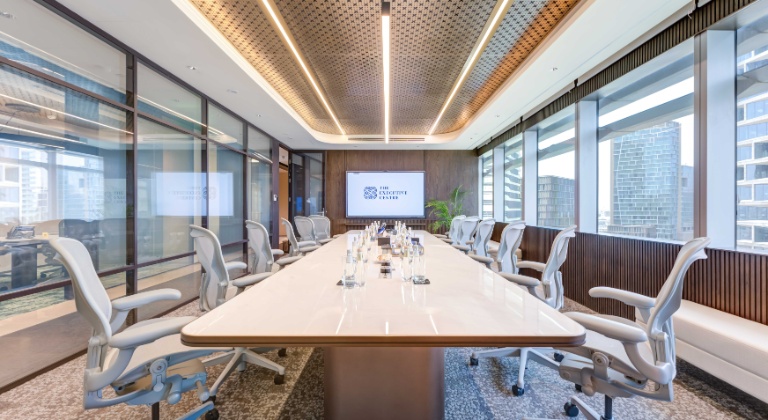
Turn Business Opportunities in Riyadh into a Launch-Ready Office Base
When asking how to start a business in Riyadh, one of the most critical practical decisions is securing a compliant operating base. Since a local address and lease agreement are often required for the Commercial Registration and Municipal License, your choice of workspace directly impacts your speed to market.
Business opportunities in Riyadh for foreigners often become easier to execute with the right operating base. The Executive Centre provides flexible workspace options for start-ups, including ready-to-use offices, Meeting Rooms, administrative support, and Virtual Office plans. These flexible options make it easier to establish a credible local presence, remain operationally agile, and convert opportunities into measurable traction.
Frequently asked questions
Start where decision-makers already gather: industry events, chambers, accelerator networks, and business communities. Keep a clear one-page profile ready (offer, proof, delivery model, local partnership approach), and prioritise pilot projects or short contracts to build momentum quickly.
Costs often come from several smaller items rather than one big line: workspace and meeting needs, admin support and outsourcing, business development and marketing, travel and client hospitality, plus core tools and basic cybersecurity. A lean “minimum viable operations” approach helps control spend while traction builds.
While English works in many corporate settings, using bilingual support, preparing key materials in both languages, and investing in relationship-building can reduce friction and help convert business opportunities in Riyadh into executable deals.


